


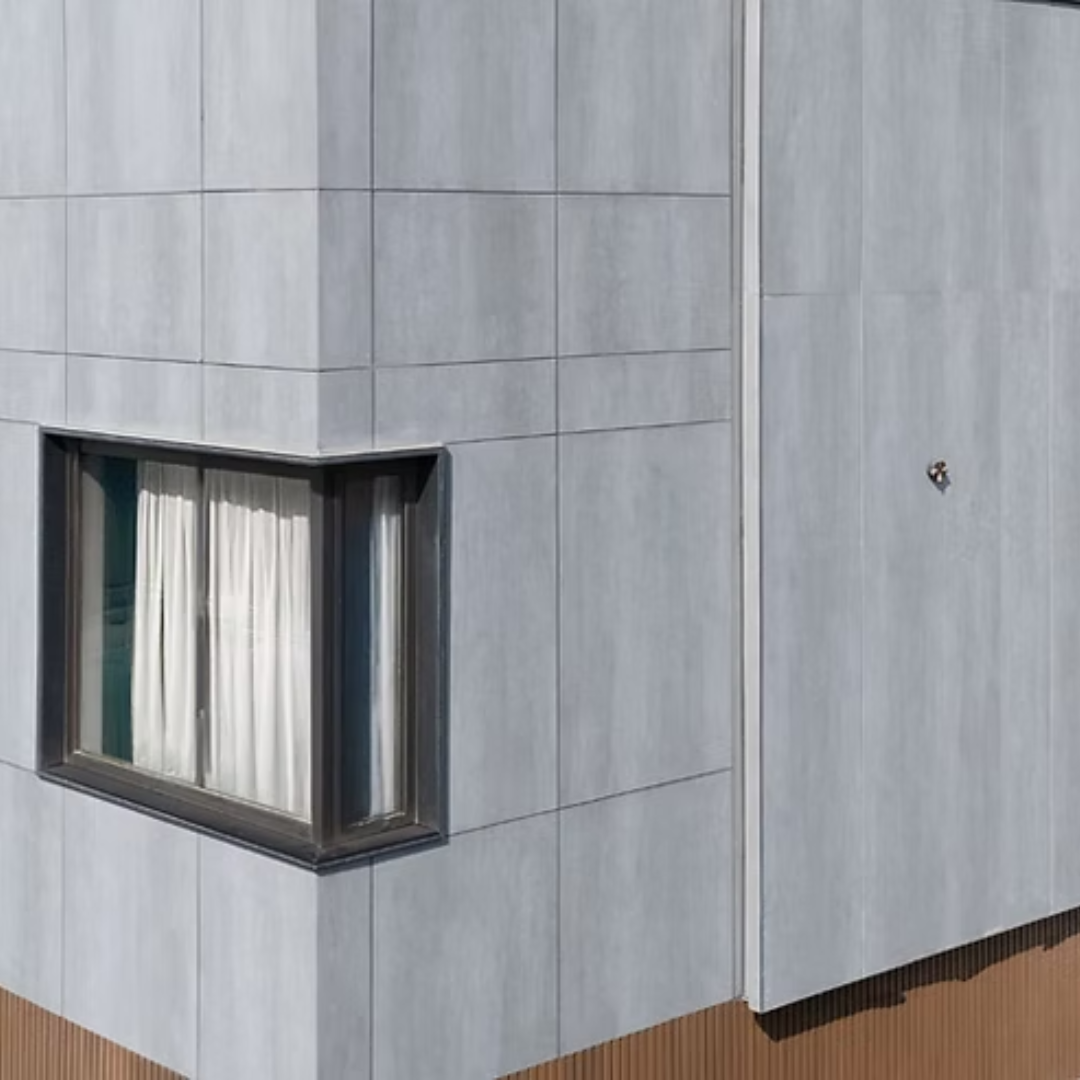
A Practical Comparison by Samrat HPL

Choosing the right façade material is a long-term decision. While appearance matters, the true performance of a façade is judged by durability, safety, maintenance, and lifecycle cost.
One of the most common façade material debates today is Exterior HPL vs Fibre Cement. Both materials are widely used—but they behave very differently over time.
At Samrat HPL, we work closely with architects and façade consultants across Europe and the Middle East, and questions around Exterior HPL vs Fibre Cement are among the most frequent we receive.
Let’s break down Exterior HPL vs Fibre Cement in a clear, unbiased, and practical way.
1. Basic Material Composition: Exterior HPL vs Fibre Cement
Exterior HPL Cladding
When comparing Exterior HPL vs Fibre Cement, Exterior HPL stands out due to its compact, high-pressure construction.
Exterior HPL is manufactured by pressing multiple layers of kraft paper impregnated with thermosetting resins under high pressure and temperature.
At Samrat HPL, this structure is further enhanced by:
- EU decorative papers
- 50-micron Plexiglass (PMMA) UV protection film
This creates a dense, non-porous, and weather-resistant façade panel.
Fibre Cement Panels
In the Exterior HPL vs Fibre Cement comparison, fibre cement panels are cement-based products made from:
- Cement
- Cellulose fibres
- Sand and mineral fillers
Their cementitious nature leads to different long-term performance characteristics.
2. Weather Resistance & Moisture Behaviour: Exterior HPL vs Fibre Cement
Exterior HPL (Samrat HPL)
- Extremely low water absorption
- No swelling, cracking, or delamination
- Performs consistently in rain, humidity, and freeze–thaw cycles
Fibre Cement
- Higher water absorption than Exterior HPL
- Risk of micro-cracks over time
- Edge damage possible with moisture ingress
Advantage in Exterior HPL vs Fibre Cement: Exterior HPL
3. UV Stability & Color Retention: Exterior HPL vs Fibre Cement
Exterior HPL (Samrat HPL)
- High lightfastness EU decorative papers
- 50-micron PMMA UV protection film
- Excellent color stability even in high-UV regions
Fibre Cement
- Painted or coated surfaces
- Visible fading over time
- Repainting often required
Advantage in Exterior HPL vs Fibre Cement: Exterior HPL
4. Mechanical Strength & Impact Resistance: Exterior HPL vs Fibre Cement
Exterior HPL
- High flexural strength
- Strong impact resistance
- Ideal for public and high-traffic façades
Fibre Cement
- Brittle material
- Prone to chipping and cracking
Advantage in Exterior HPL vs Fibre Cement: Exterior HPL
5. Fire Performance: Exterior HPL vs Fibre Cement
In the Exterior HPL vs Fibre Cement discussion, fire performance depends on certified testing rather than assumptions.
- Exterior HPL is available in certified fire-rated grades
- Fibre cement is naturally non-combustible

6. Installation & Handling: Exterior HPL vs Fibre Cement
Exterior HPL
- Lightweight
- Easy machining and installation
- Ideal for ventilated façade systems
Fibre Cement
- Heavier panels
- Fragile during handling
- Higher breakage risk on-site
Advantage in Exterior HPL vs Fibre Cement: Exterior HPL
7. Maintenance & Lifecycle Cost: Exterior HPL vs Fibre Cement
Exterior HPL
- No repainting required
- Easy cleaning
- Long service life
Fibre Cement
- Periodic repainting needed
- Higher long-term maintenance costs
Advantage in Exterior HPL vs Fibre Cement: Exterior HPL
8. Design Flexibility: Exterior HPL vs Fibre Cement
Exterior HPL (Samrat HPL)
- Wide color, texture, and woodgrain options
- Batch consistency
- Large-format panels available
Fibre Cement
- Limited textures
- Paint finish inconsistency over time
Advantage in Exterior HPL vs Fibre Cement: Exterior HPL
Final Verdict: Exterior HPL vs Fibre Cement
When comparing Exterior HPL vs Fibre Cement, Exterior HPL delivers superior performance in durability, aesthetics, maintenance, and lifecycle value.
This is why Exterior HPL is increasingly replacing fibre cement in:
- Commercial buildings
- Hospitality projects
- High-visibility façades
- High-UV and harsh climates
At Samrat HPL, our Exterior HPL cladding is engineered to meet real-world façade demands—without compromise.